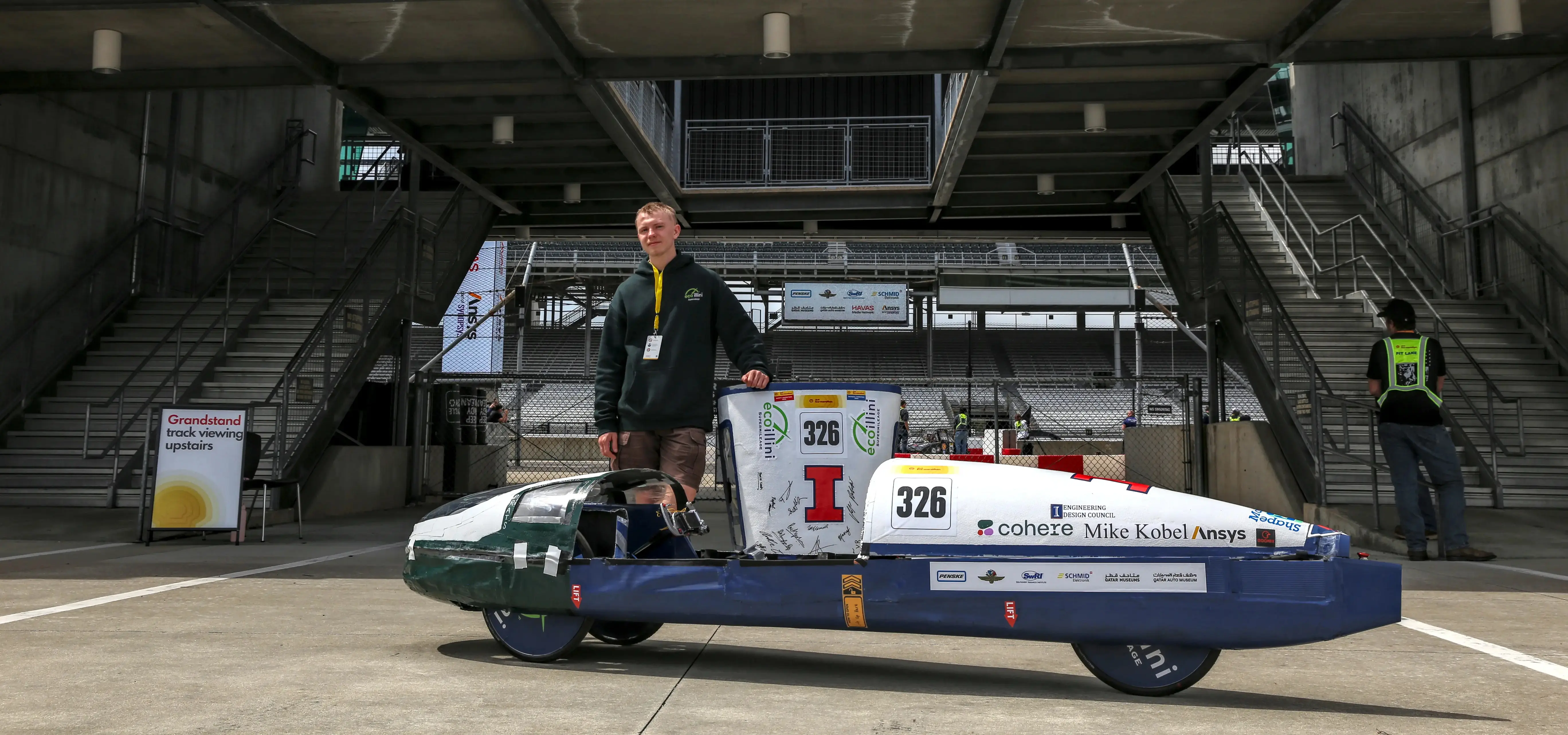
Shell EcoMarathon 2026
This year marked my journey with the EcoIllini Automotive team, an experience that took me from the university lab to the heart of the Indianapolis Motor Speedway during the prestigious Shell Ecomarathon competition. As a member of this dynamic group of engineers and innovators, I had the opportunity to contribute to a project that pushed the boundaries of automotive efficiency while immersing myself in the high-stakes environment of one of motorsports' most iconic venues.
The EcoMarathon is more than just a competition for maximum efficiency: it's a test of planning, collaboration, and high-stakes problem solving. This specific competition marked the return of our team to Indianapolis after a two-year hiatus. Having to rebuild our knowledge base and skills from scratch, we underwent an incredible effort to go from nothing to a functioning car in one school year.
This year I took on the role of Electrical Lead, with a focus on the battery system of our car. Because of it's importance to the powertrain and overall function of the car, I inderstood the importance of timely delivery and ensuring reliability. My team for this project grew to a trio, and we contributed countless hours on planning, research, testing, and integration.
Because it was our first year doing Battery Electric Prototype (the Shell name for our section), we had no prior experience to base our designs from. Forming separate teams for the BMS (battery voltage balancing system), motor controller, and PDU (power delivery unit), we split the work of creatig the power electronics into manageable pieces that made it a solveable challenge. Before the design and manufacture of our components, we set standards for power delivery and communication to follow the CAN (controller area network) specification over an RJ-45 connector.
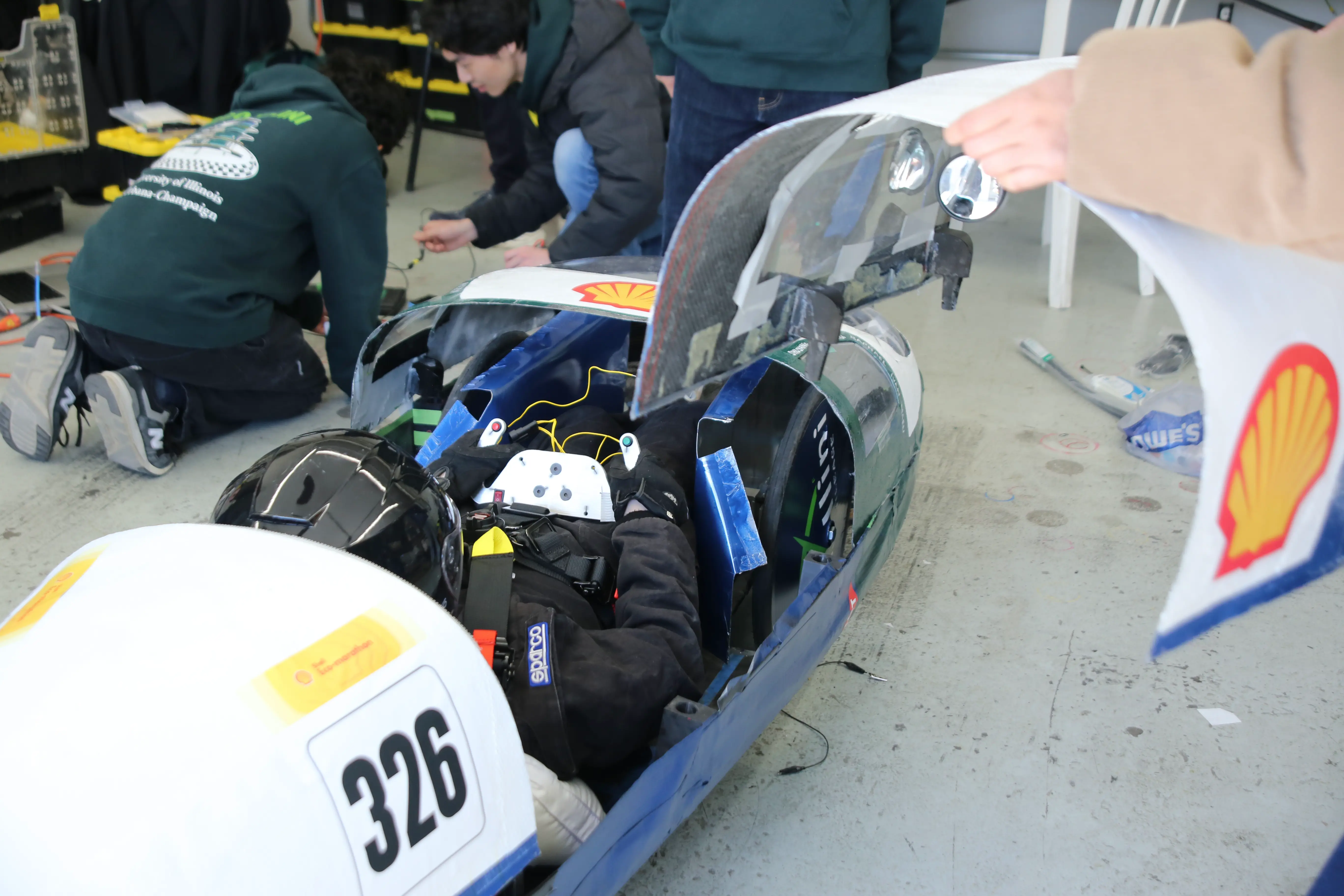
Each low-voltage board on our car is CAN-compatible, and can be used for board control, configuration, data logging/telemetry, or debugging. Working closely with the BMS team, we built the balancing board and tested it on a mock battery to ensure functionality. Because we had standardized the pinouts, voltage levels, and communication protocol, the actual network layout and installation in the car was wonderfully effective. This year we accomplished full PnP (plug-and-play) functionality for our CAN bus, allowing us to test boards in various configurations outside of the car and in a safe environment.
Besides this year's huge success with the CAN networking and electrical intercommunication, the battery team did a great job with actually implementing and testing the battery packs and charging system. Building a battery sounds easy on its own, but the lack of infrastructure, experience and tools within our team specifically related to electric vehicle design meant that each component had to be designed to be as fault tolerant and reliable as possible. Within our team, this took the form of engineering the battery to absolutely never be the failure point of the car. Given the serious hazard posed by lithium-ion cells, we took an abundance of caution and made provisions for several worst-case scenarios.
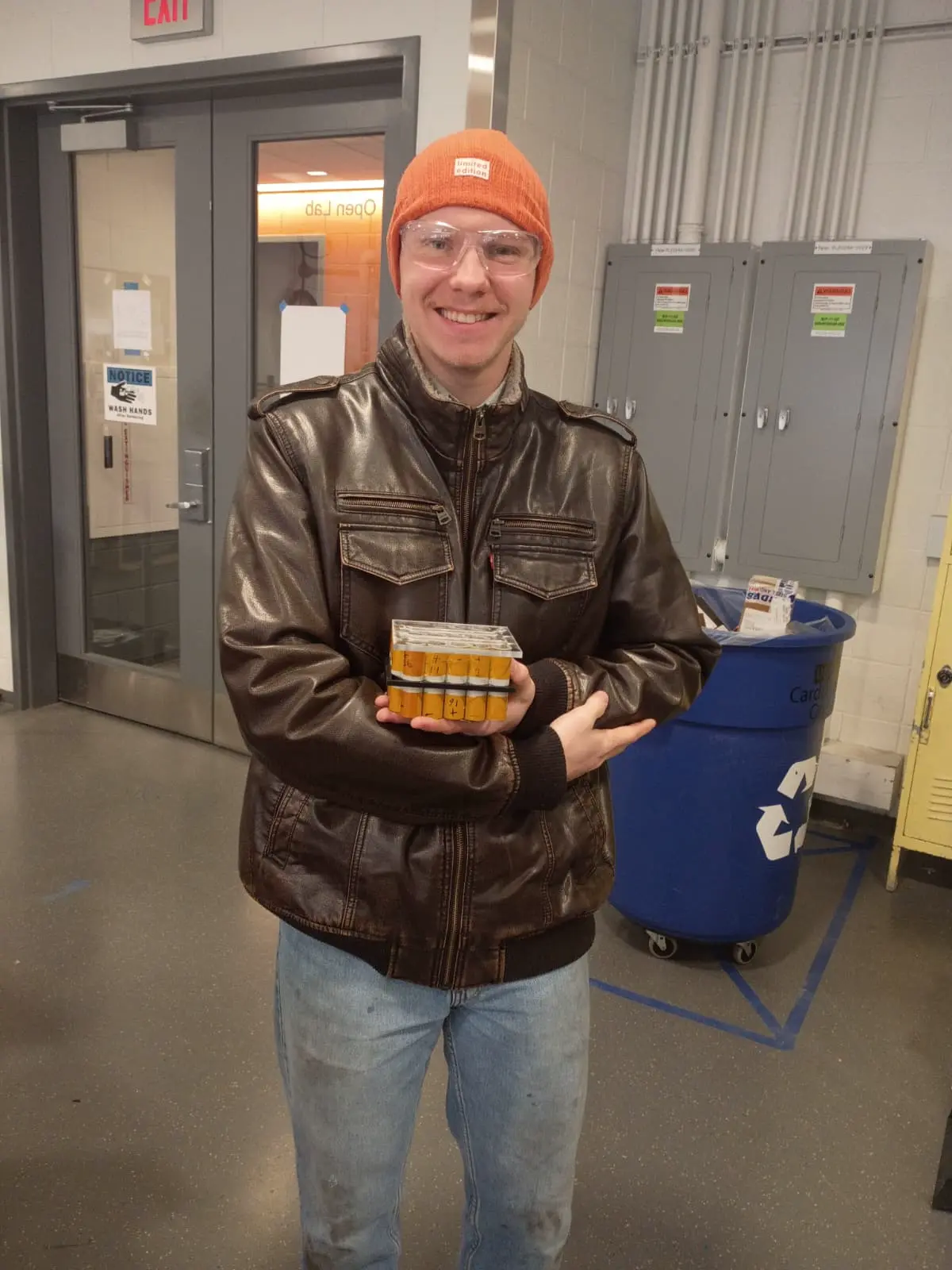
Making the "unkillable battery" manifested in several collaborations, each strengthening our communication and planning skills. First, we collaborated with mechanical team on waterjetting sheet metal for the case, with me welding it to make a waterproof enclosure. Secondly, the whole-team discussion took place of integration and spatial planning. Since each board, mechanical assembly, and miscellaneous item occupies space, discussing to make sure everything was accessible in the field was a priority. Finally, and most importantly, we designed the battery to be maintainable in sections. Because our team lacked tried-and-tested tools for charging and balancing the 36-volt battery, we needed an alternate way to guarantee it's usability, should the BMS and charging boards encounter issues.
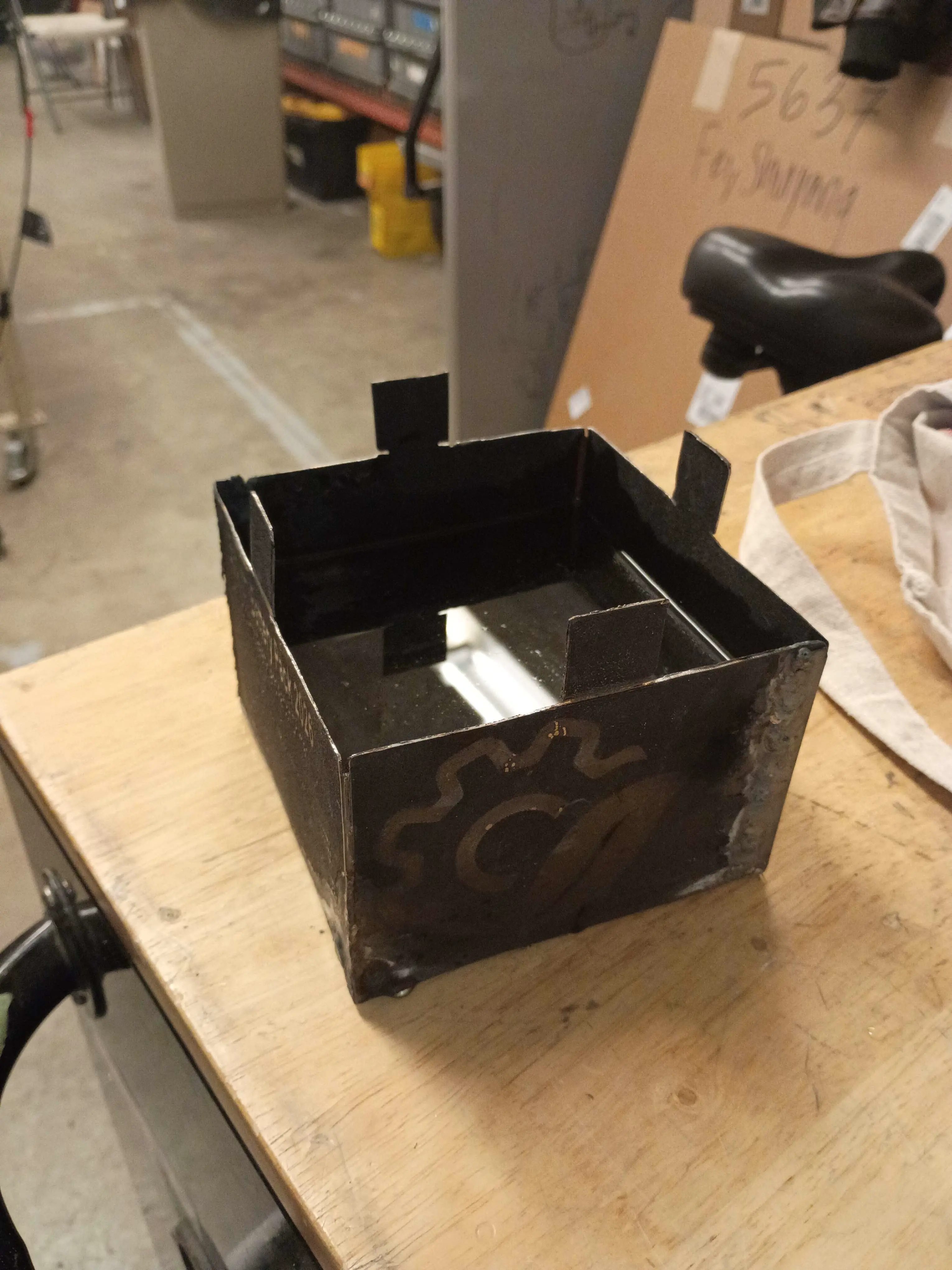
Our efforts in collaboration and contingency paid off, with secure, watertight enclosure; separable charging ports; and solid attachment to the mechanical frame. Our battery ended up being more than enough volume-wise, which is exactly what it was intended to be.
Because of our constant effort, we entered Shell EcoMarathon with a car that passed technical inspection on the first try, suffered no major mechanical or electrical issues, and completed 6 separate timed runs on a single charge, achieving a best-run efficiency 27x that of a Tesla!
I'm incredibly happy with the process and result by which we built the team and the car this year. It was the best hands-on crash-course in project managment, communication, and planning I've ever had, and I can't wait to see what next season will bring.
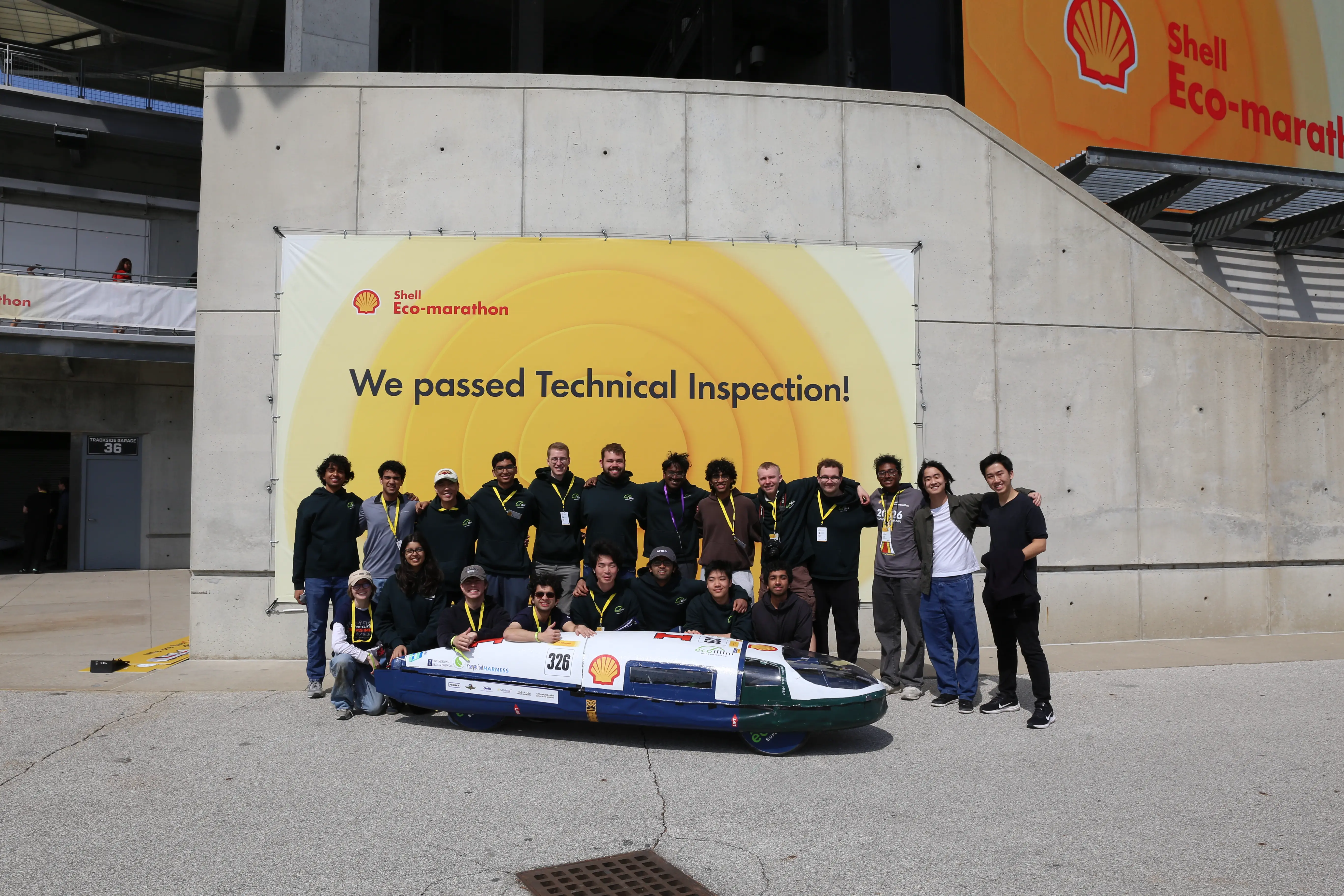
Whole team photo with the car after our incredibly successful season
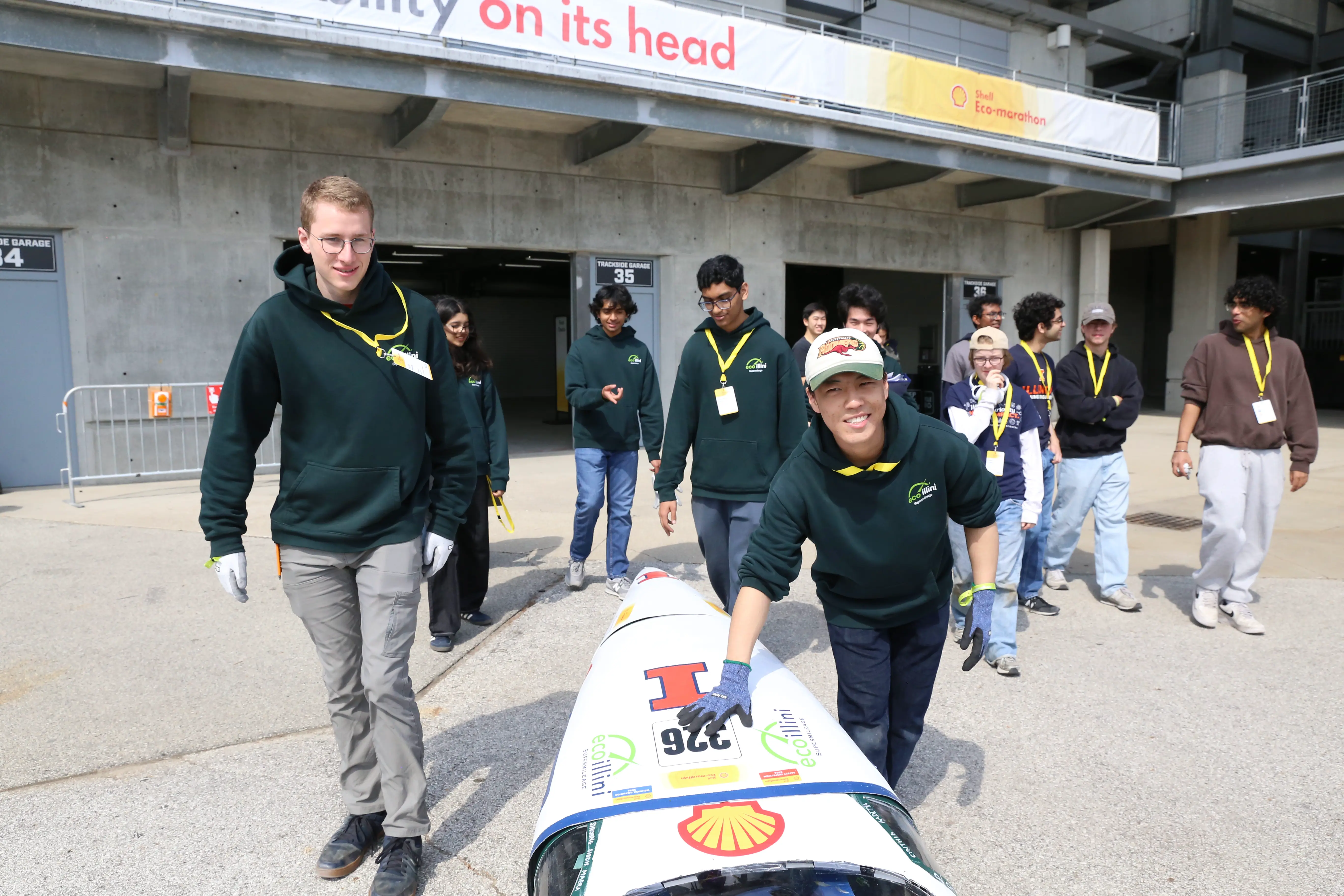
Our car being wheeled out of the tech garages after our successful technical inspection
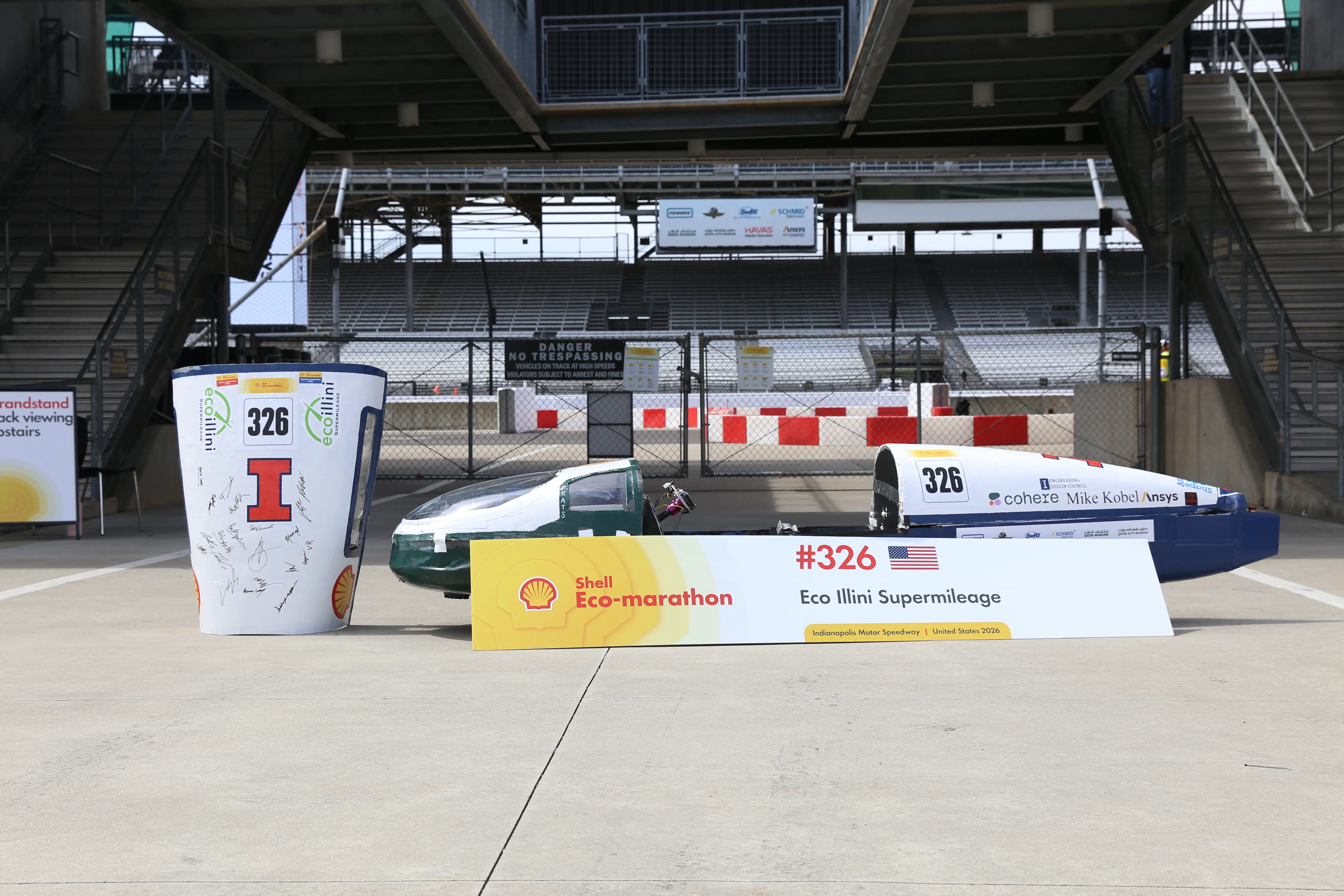
Our car being wheeled out of the tech garages after our successful technical inspection
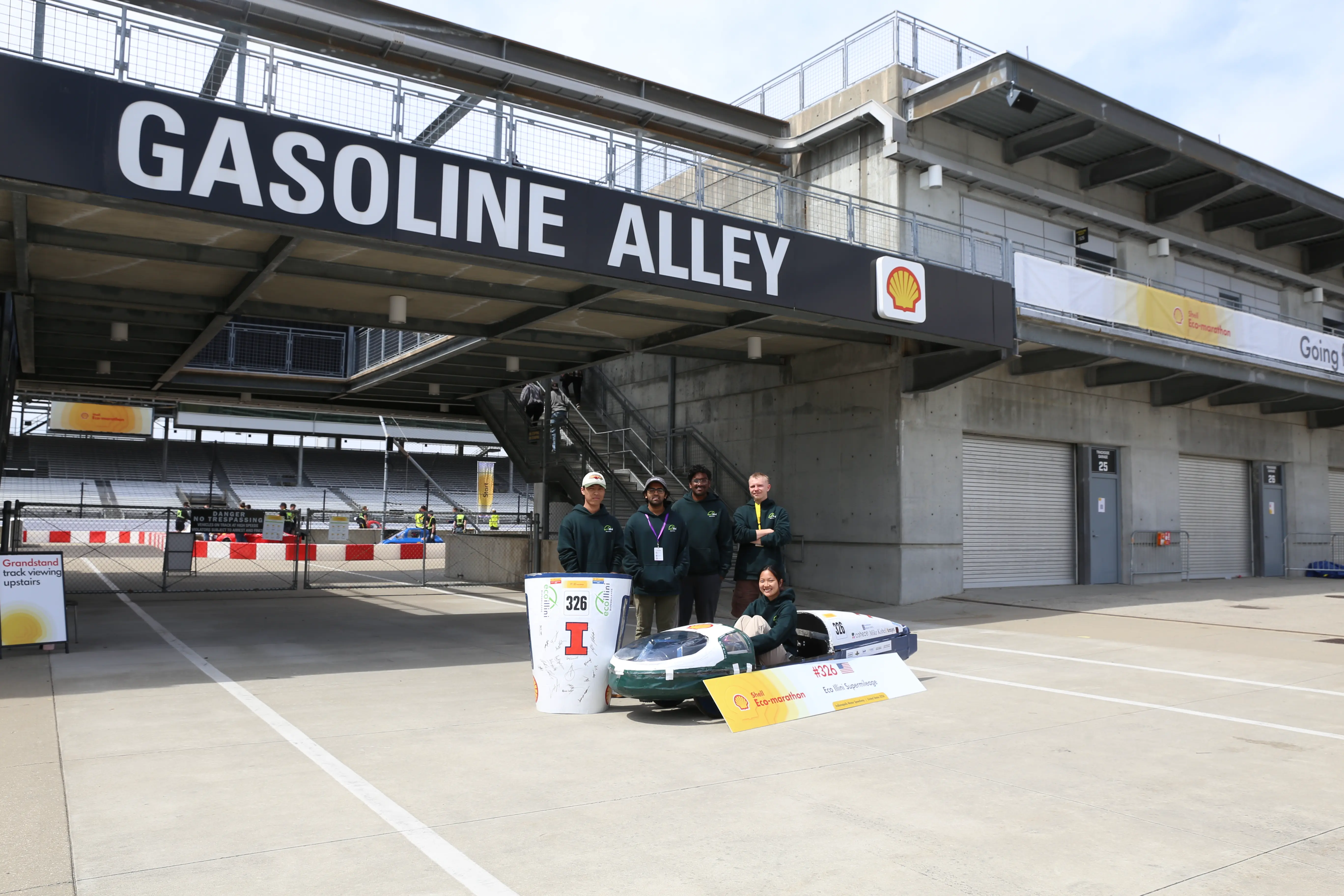
The 2025-2026 administration team. Responsible for keeping the club running and on-track
L/R: Shuyang (Ordering), Aaditya (VP), Pratyush (President), me (Coordination), Cynthia (treasury)
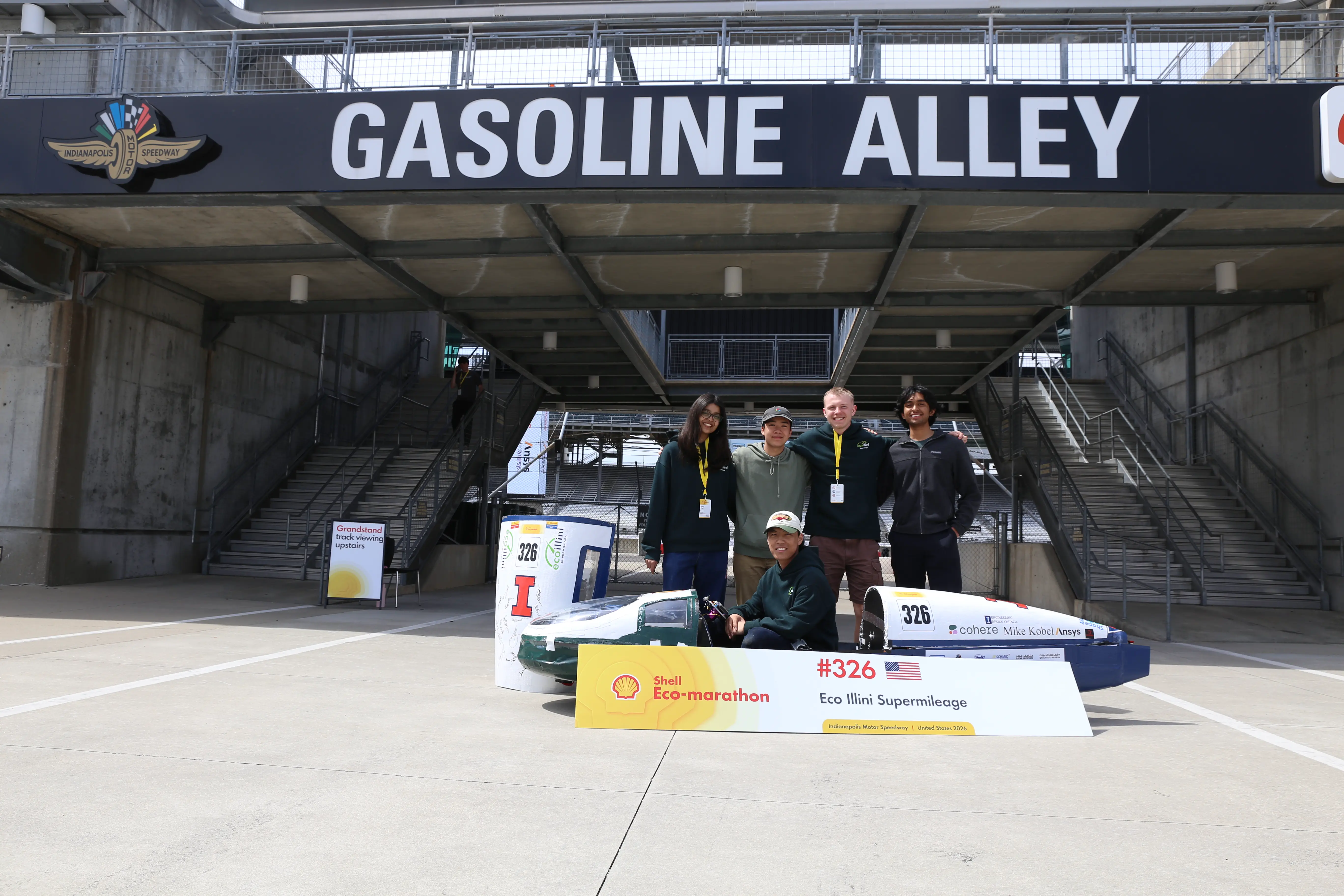
The 2025-2026 body team. Responsible for re-discovering carbon fiber techniques and manufacturing our car's shell
L/R: Maera, Raphael, me, Sidd, Shuyang (in car)
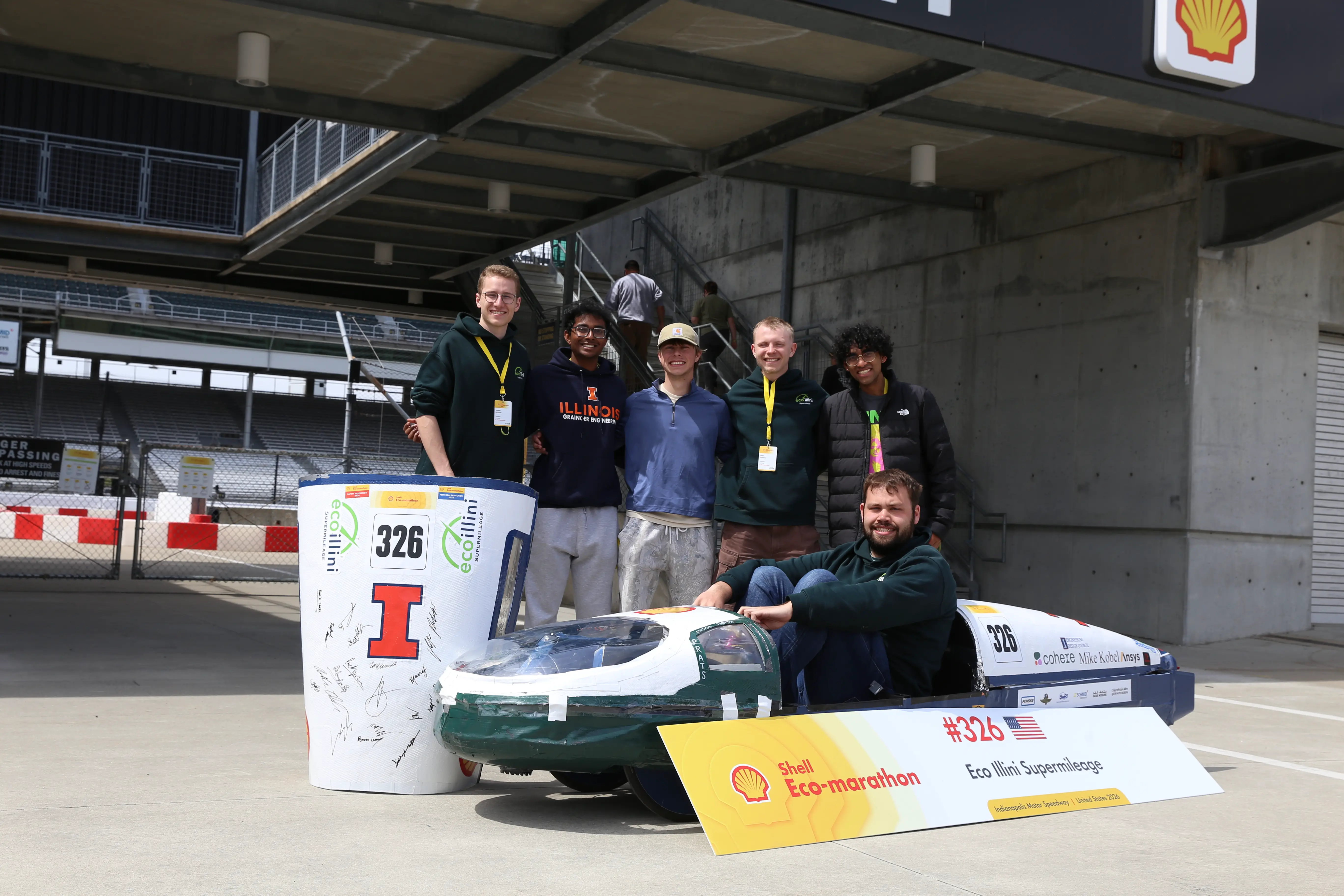
The 2025-2026 mechanical team. Responsible for frame, drivetrain, steering, integration
L/R: Logan (steering), Satvik, Josh, Me (Battery, integration), Aarush (Drivetrain), Ronan (in car, frame)
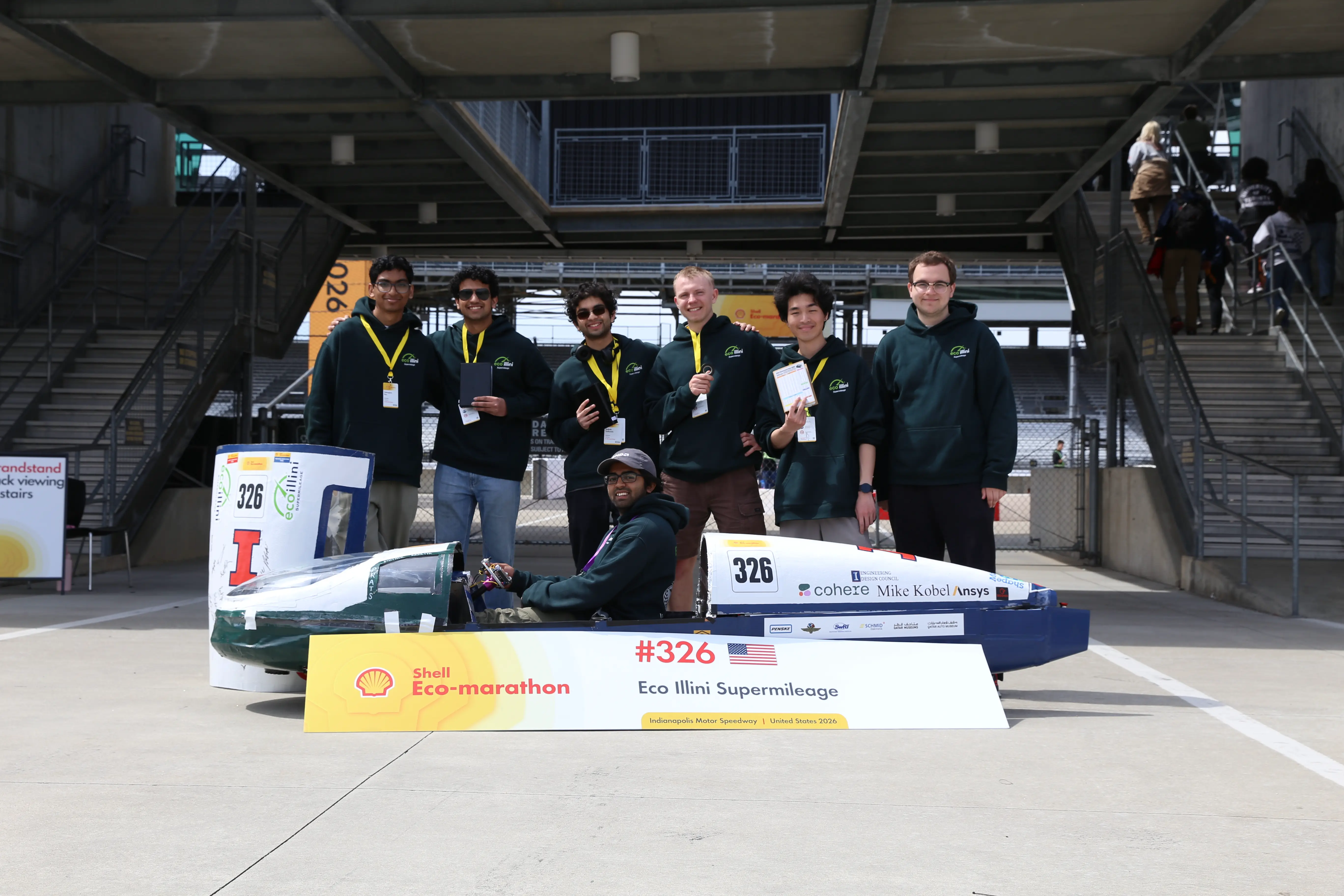
The 2025-2026 electrical team, responsible for power delivery and network communications
L/R: Debarghya (PDU [power distribution]), Vikram (telemetry/data), Aniketh (BMS [battery managment system]), me (battery, BMS integration, relays), Andrew (motor control), Daniel (motor control), Aaditya (in car, lead)